A Near-Total Lunar Eclipse, the Fastest Star in the Galaxy, and Orbital Mirrors
The August eclipse season closes with a deep partial lunar eclipse visible in full from Texas on the night of the 27th, and the fight over Reflect Orbital's sunlight-beaming mirrors now has hard numbers behind it. Roman is a week from launch.
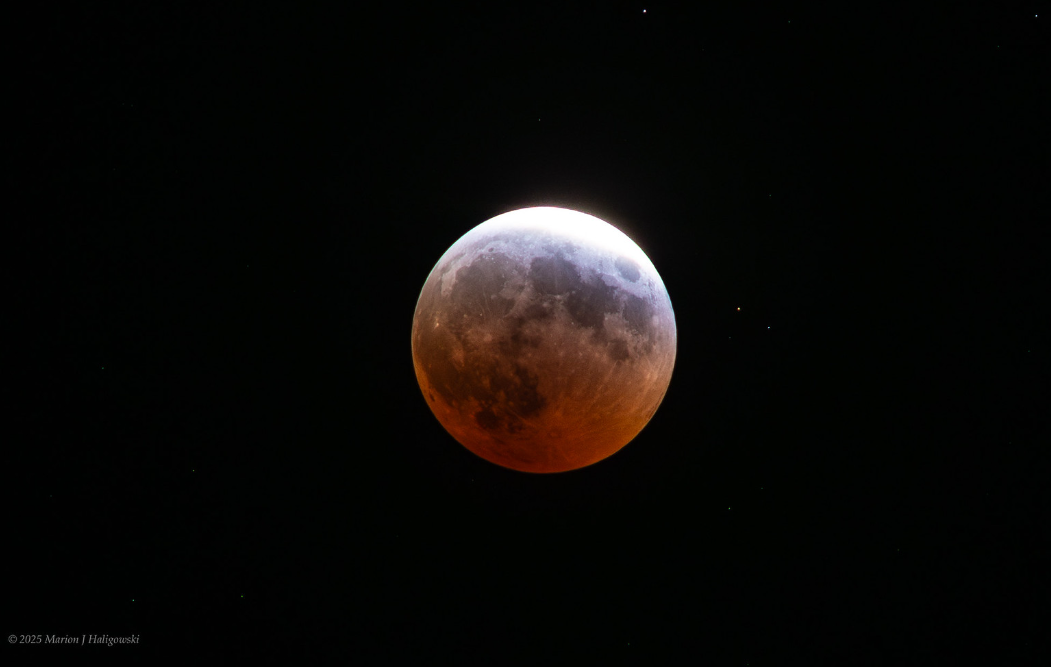
Deep partial lunar eclipse the night of August 27, visible start to finish from Texas
The Moon passes 93 percent into Earth's umbral shadow, with penumbral phases starting 8:23 PM CDT on the 27th, partial phases from 9:34 PM, and maximum at 11:14 PM CDT. The Americas get the whole event, and unlike a solar eclipse it needs no filters, no travel, and no fixed attention span. A backyard, naked-eye event that unfolds slowly over hours is about as low-friction as skywatching gets with a sensory-seeking six year old.
Skywatching · learn now
August 27, 2026 to August 28, 2026 · Visible across the Americas, including North Texas
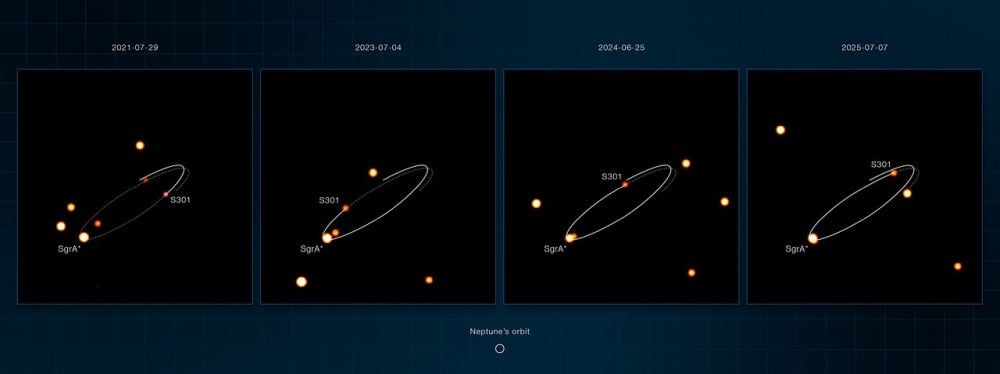
S301: the fastest star ever found orbiting the Milky Way's black hole
The GRAVITY collaboration used ESO's Very Large Telescope to find a star that circles Sagittarius A* every 8.7 years, closes to 12 astronomical units, and moves at roughly 25,000 km/s. It is close enough that the black hole's spin measurably affects it, which makes it the best available test bed for general relativity in a strong field. The Nature paper is on arXiv now if you want the actual orbital fits rather than the press release.
Astronomy · learn now
New study puts numbers on how much Reflect Orbital's mirrors would brighten the sky
Miroslav Kocifaj and colleagues calculate that each reflected beam would shine like thousands of full moons and scatter light tens of kilometers beyond its target, well outside the customer's footprint. The company's first test satellite, with an 18 by 18 meter mirror, launches later this year under an FCC approval granted in July, ahead of a proposed 50,000-satellite constellation. This is the concrete version of an argument that has been vague for a year: a private company selling sunlight on demand, with dark skies as the externality.
Space policy · learn now
Roman Space Telescope is fueled and a week from launch
NASA has finished fueling the 8,000 kg observatory and moved into combined operations with SpaceX for an August 30 liftoff at 7:26 a.m. Eastern on a Falcon Heavy, only the 13th flight of that variant. Roman's field of view is at least 100 times Hubble's, so its survey data will be the raw material for wide-field cosmology work for the next decade. Worth having the stream open that Sunday morning.
Space missions · know the name
August 30, 2026 · Launch Complex 39A, Kennedy Space Center, Florida
The Milky Way's oldest known merger dated to 11.8 billion years ago
Astronomers pinned a date on the collision between the infant Milky Way and a dwarf galaxy known as LKH, pushing our galaxy's assembly history further back than earlier estimates allowed. Work like this depends on stellar chemistry and orbital archaeology across millions of stars, the same data pipeline that Rubin and SDSS-V are now flooding. It is the clearest timestamp yet on how the disk we live in got started.
Astronomy · just aware
New Taiwan fossils suggest Denisovans were unusually tall
Fossil material attributed to Penghu Denisovans implies body sizes larger than researchers had assumed for the group, which has been known mostly from fragments and genetics. Denisovan biology has been reconstructed almost entirely from DNA, so any skeletal evidence changes the picture disproportionately. Expect the height estimates to be argued over before they settle.
Human origins · just aware
AccuWeather trims the hurricane outlook as a super El Nino strengthens
The updated call is 8 to 14 named storms with 1 to 3 more direct U.S. impacts, with the northern Gulf Coast and the Carolinas flagged as the higher-risk zones; NOAA still gives a 75 percent chance of a below-normal season. The driver is El Nino wind shear tearing at Atlantic systems. For North Texas the more consequential half of a strong El Nino is the winter that follows: wetter, cooler, and more ice-storm prone than the last few.
Earth and climate · know the name
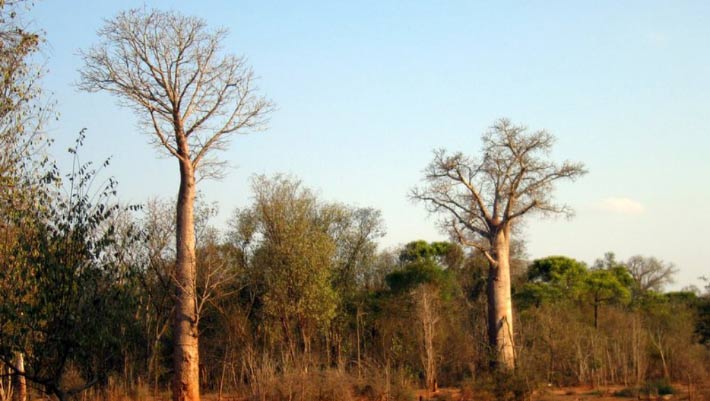
A new baobab species described from Madagascar
Botanists named Adansonia bozy, adding to a genus of only a handful of species, nearly all of them Malagasy and most of them threatened. Finding a new tree that large in 2026 says something about how thin botanical coverage still is in Madagascar's dry forests. Small item, but a good one for the file of things still left to name.
Nature · just aware